Proyecto realizado en las residencias Ceramic Res. Organizadas por Co-net en la ESCAL (L’Alcora).





Hace unos años una mujer me maldijo deseándome que se me secase el río. Qué significa esto, me preguntaba yo, pensando que seguramente tendría algo que ver con la posibilidad, o la no posibilidad en este caso, de tener hijos. Realmente es una cosa mala que se seque un río, lo fértil y húmedo pasa a ser seco y árido, violento para el cuerpo humano cuando este se dispone a habitar.
En Galicia, este año, me parece que ha llovido más que ningún otro que yo tenga en mi memoria, los días nublados y los pocos rayos de luz han dejado unos bosques verdes y han hecho que yo tenga que tomar pastillas de vitamina D todos los meses.
En cambio, la Comunidad Valenciana que, en realidad, está relativamente cerca y ha sido el lugar de mis veranos familiares, vive uno de los años hidrológicos más secos de su historia.
Palabras como secaño aparecen en mi memoria, secaño, o acequia ya que mi familia tenía un molino en Alberic. Valencia me parece salada.
¡Qué calor hace!
Me baño en el mar. Este cuerpo de agua tan utilizado y sobrepoblado en el mediterráneo durante los periodos estivales. El fluído no está tan fresco como me gustaría, yo estoy sudando de estar bajo el sol a estas temperaturas y soy salada también. Así, hago un intercambio entre mi sal y la del océano mientras me deshidrato y me mojo al mismo tiempo. ¿Podría beber a través de mi piel?
Creo que mi cuerpo no absorbe las cosas tanto como debería, no sé cómo de permeable soy pero sé que soy un circuito líquido, soy al final un 60% de agua cambiante.
Diane Akerman escribe en Una historia natural de los sentidos este texto que reflexiona sobre las ideas que queremos tratar y además, explica de una manera bastante cómica esta atracción de los hombres por las mujeres debido a su olor:
Nuestro sentido del olfato, como tantas de nuestras funciones orgánicas, es un atavismo de aquel tiempo, el comienzo de la evolución, cuando vivíamos en los mares. Antes de que podamos notarlo, un olor debe empezar por disolverse en una solución acuosa que nuestras membranas mucosas puedan absorber. Practicando deportes acuáticos en las Bahamas, hace unos años, advertí por primera vez dos cosas: que llevamos el océano dentro de nosotros, y que nuestras venas son un reflejo de las mareas. En mi condición de mujer ser humano, con ovarios cuya producción se asemeja a las huevas del pez, al introducirme en el vientre suave y ondulante del mar del que salieron nuestros
primeros antepasados hace milenios me sentí tan conmovida, que mis ojos se humedecieron bajo el agua y mezclé mi sal con la del mar. Distraída con esos pensamientos, miré a mi alrededor para localizar la embarcación desde la cual me había zambullido. No la encontré. Pero no importaba: todo el mar era mi hogar.
Ese momento de misticismo me dejó la nariz irritada, y sentí dolor al salir a la superficie, hasta que me quité la máscara, me soné la nariz, y me tranquilicé. Pero nunca he olvidado ese sentido de pertenencia. Nuestra sangre es, en gran medida, agua salada, seguimos necesitando una solución salina (agua salada) para lavarnos los ojos o ponernos las lentes de contacto, y en toda época se ha dicho que la vagina de la mujer huele a pescado. De hecho, Sandor Ferenczi, un discípulo de Freud, llegó a afirmar (…) que los hombres aman a las mujeres sólo porque el vientre de ellas huele a arenque en salmuera, y los hombres, tratan de volver al océano primordial.
En La metafísica de los tubos de Amelie Nothomb escribe sobre su simbiosis acuática durante sus primero años de vida. En este libro también escribe sobre el cuerpo como tubo y sobre los tubos como una mezcla singular entre “plenitud y vacío, de materia hueca, una membrana de existencia que protege un haz de inexistencia”. Su cuerpo, como el tubo de una manguera, poseía flexibilidad pero era también rígido. “Conocía la serenidad absoluta del cilindro. Filtraba el universo y nada retenía”:
Lo ideal, cuando llueve sin cesar, es, además, ir a nadar. El remedio contra el agua es más agua todavía. En adelante, me pasaba la vida en el Pequeño Lago Verde. Nishio-san me acompañaba cada día, agarrada a su paraguas: ella no había renunciado a tomar partido en favor de lo seco. Yo, de entrada, había elegido el bando opuesto: salía de casa con el traje de baño puesto para estar mojada antes de nadar. No tener nunca tiempo de secarme, ése era mi lema. Me tiraba de cabeza al lago y no salía de allí. El momento más hermoso era el chaparrón: ascendía entonces a la superficie para hacer el muerto y recibir la sublime ducha perpendicular. El mundo caía sobre mi cuerpo entero. Abría la boca para tragarme la cascada, no rechazaba ni una sola gota de lo que la lluvia me ofrecía. El universo era generosidad y yo tenía la sed suficiente para beberme hasta el último sorbo.
El agua debajo de mí, el agua encima de mí, el agua dentro de mí: yo era el agua.
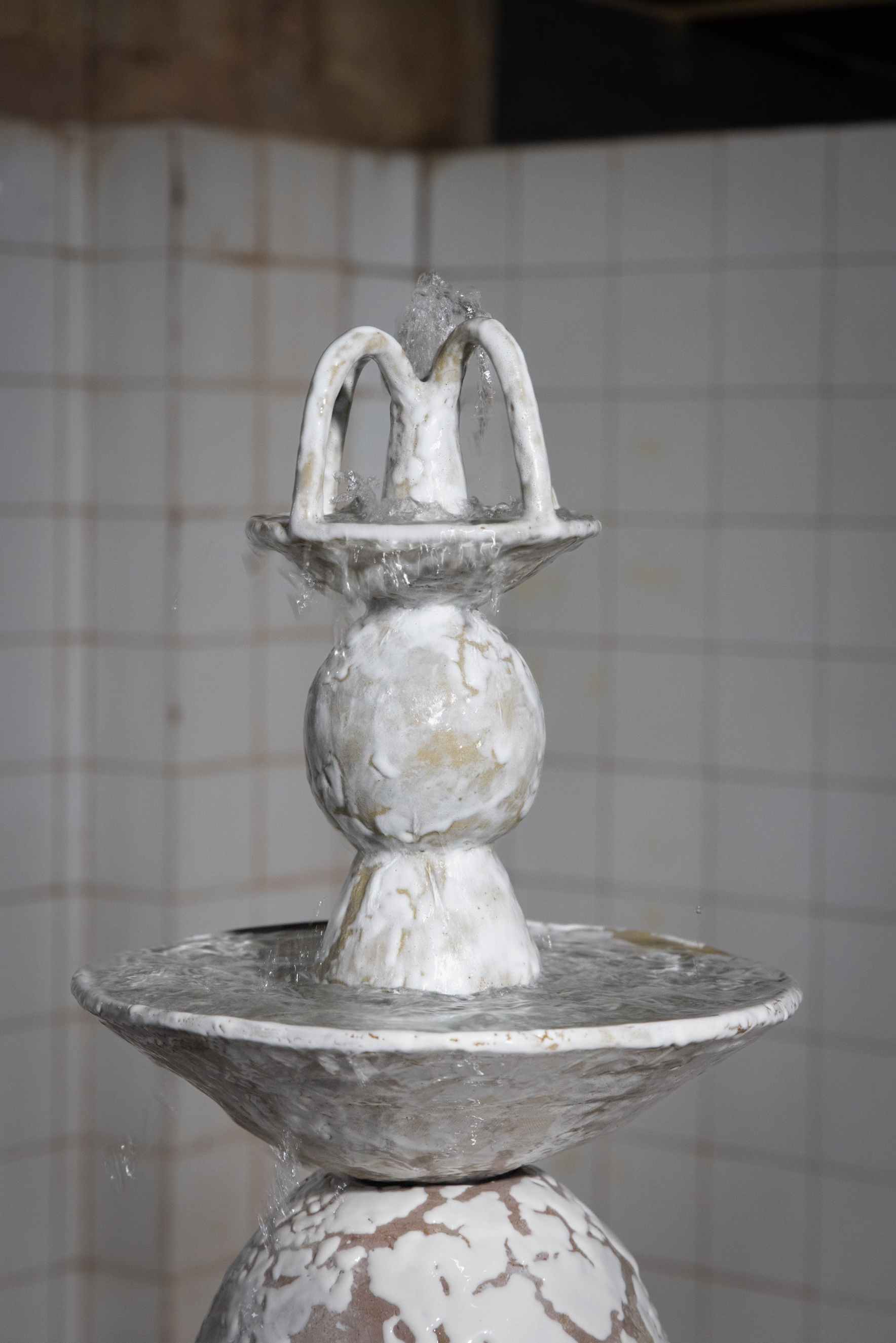
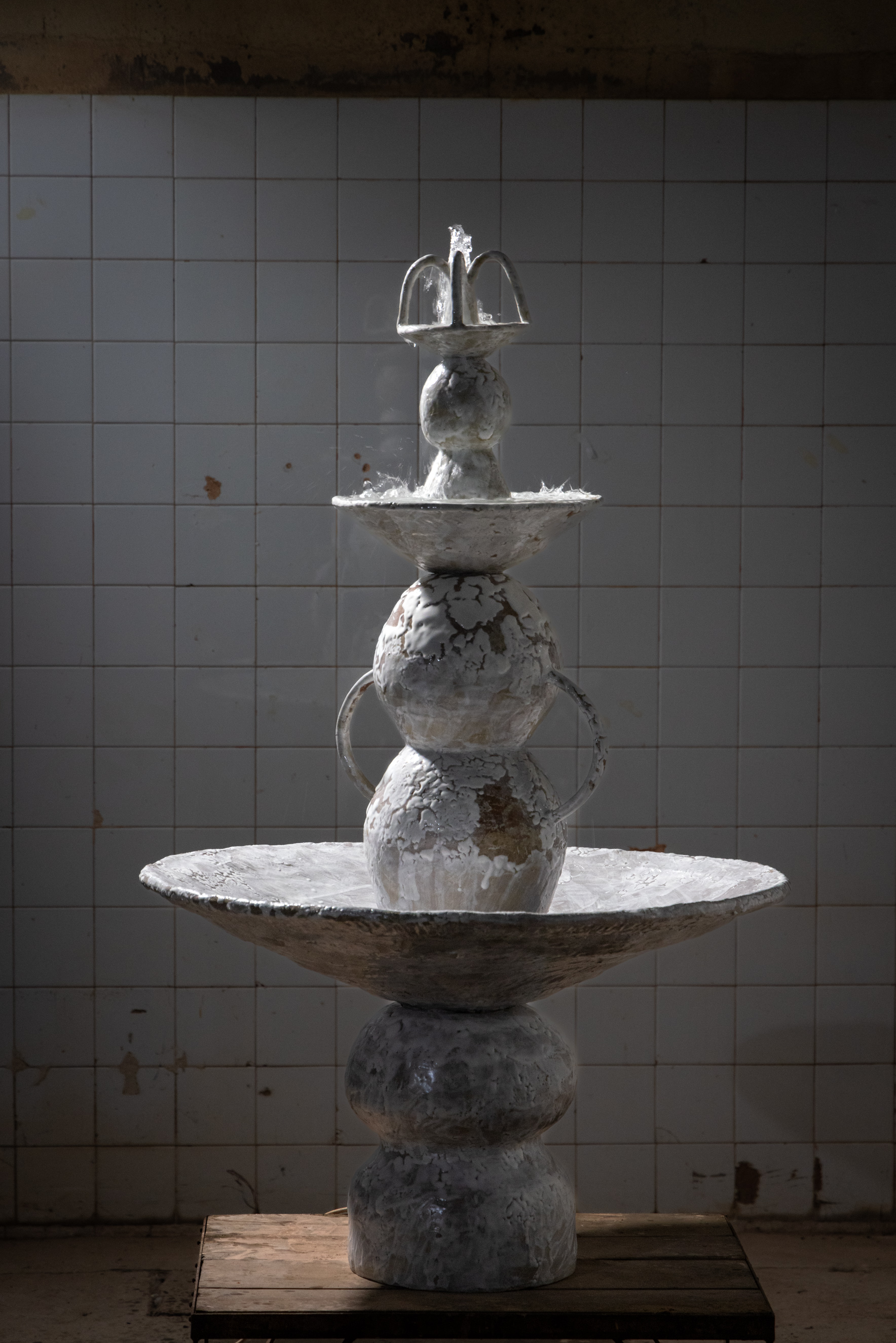
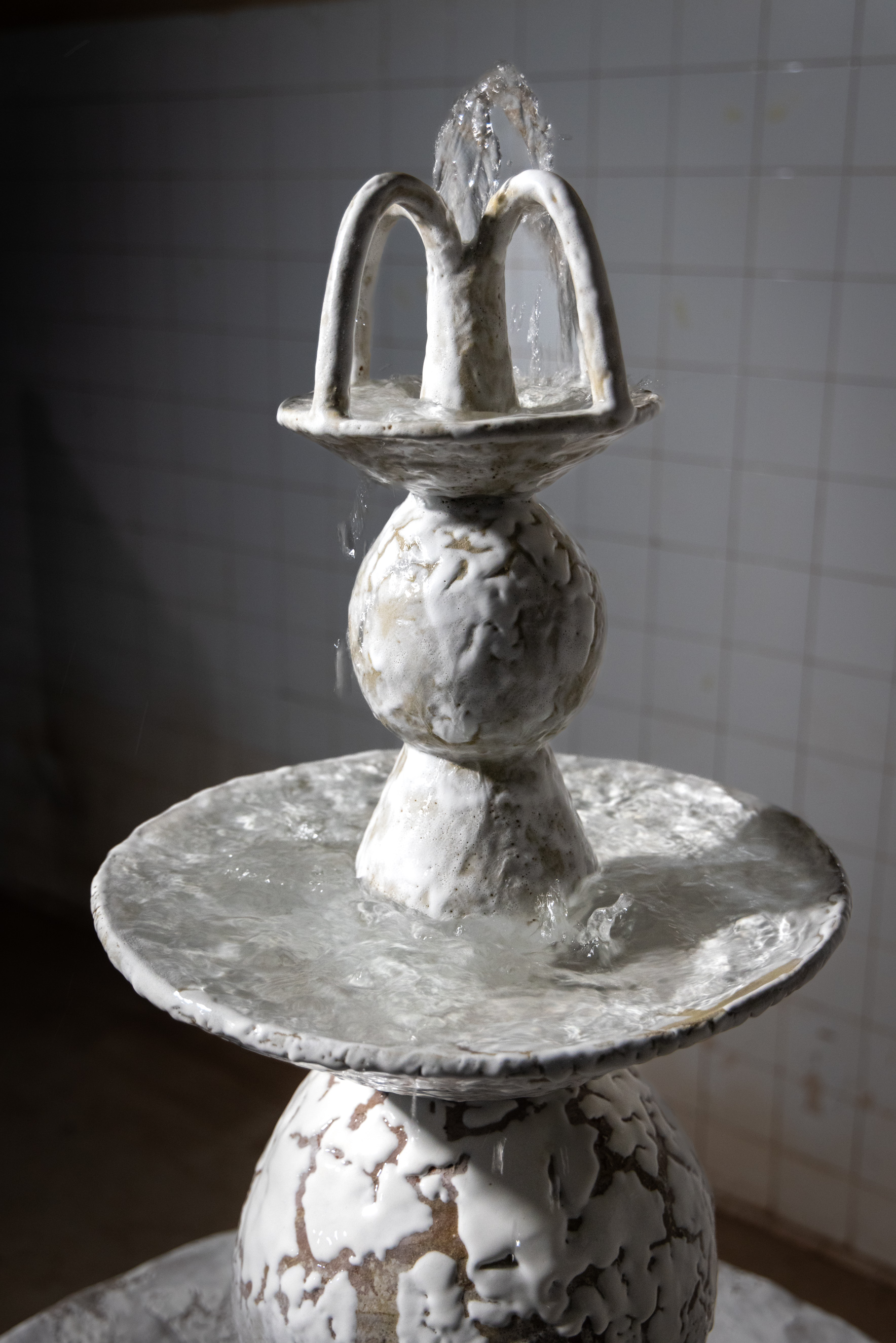
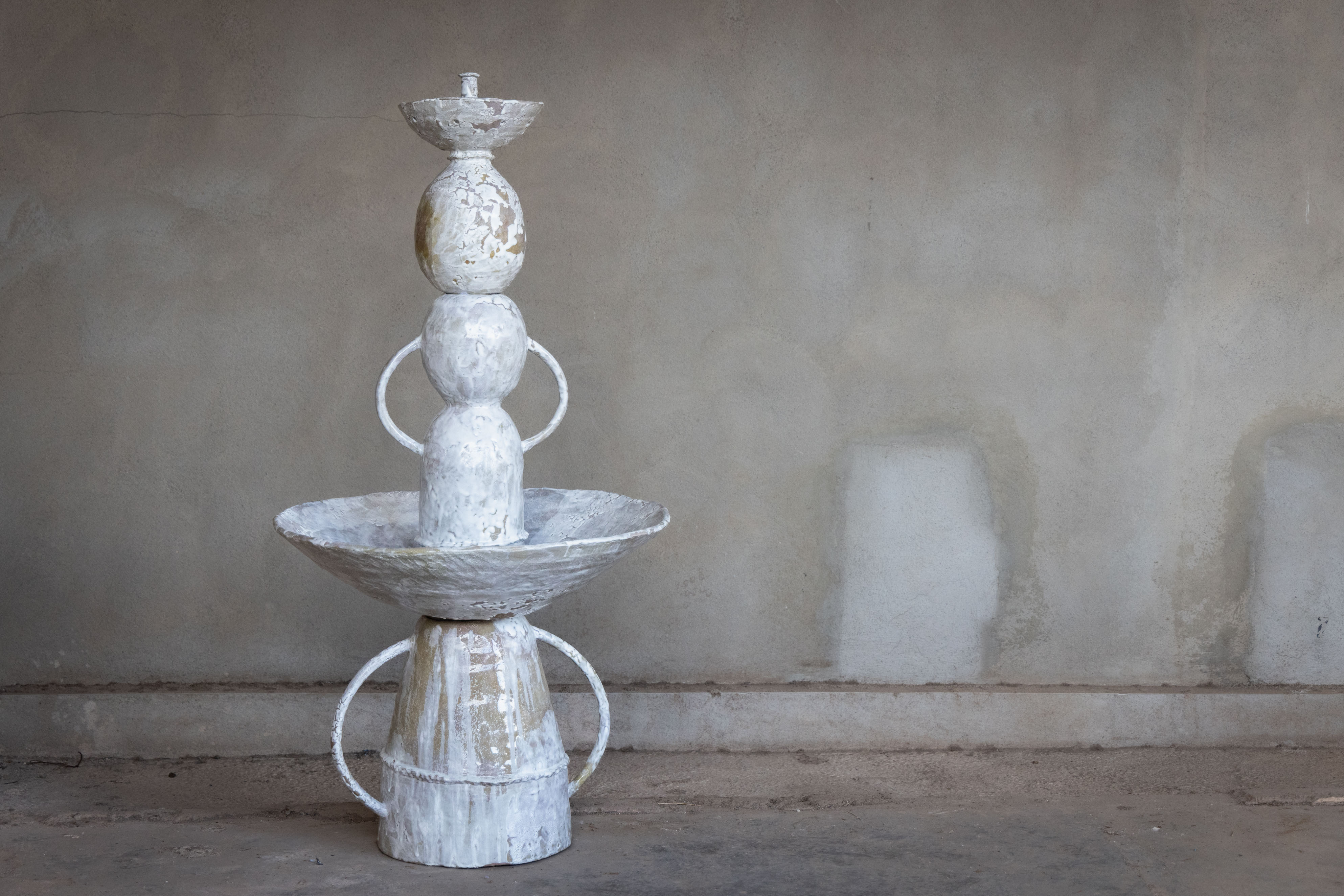
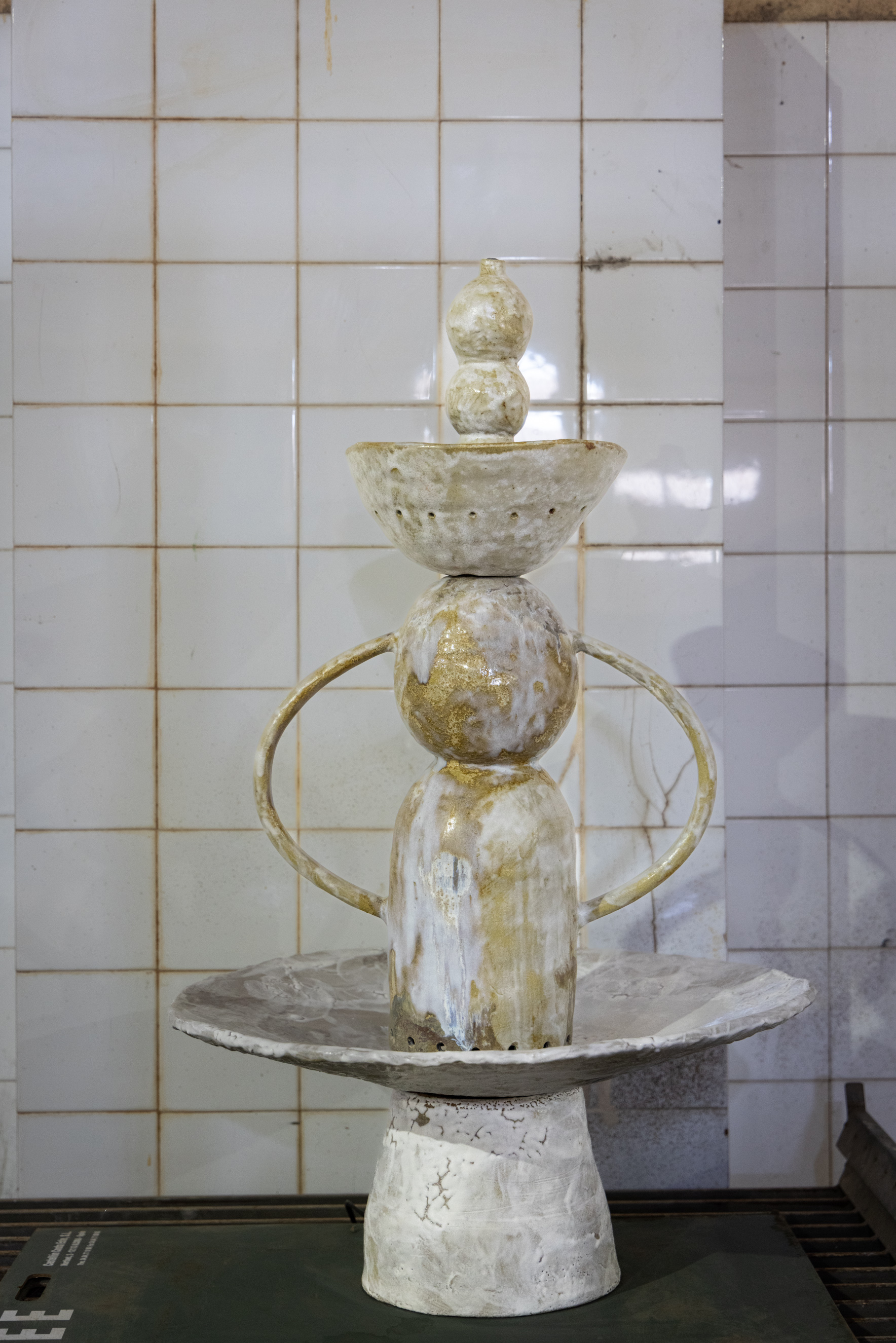
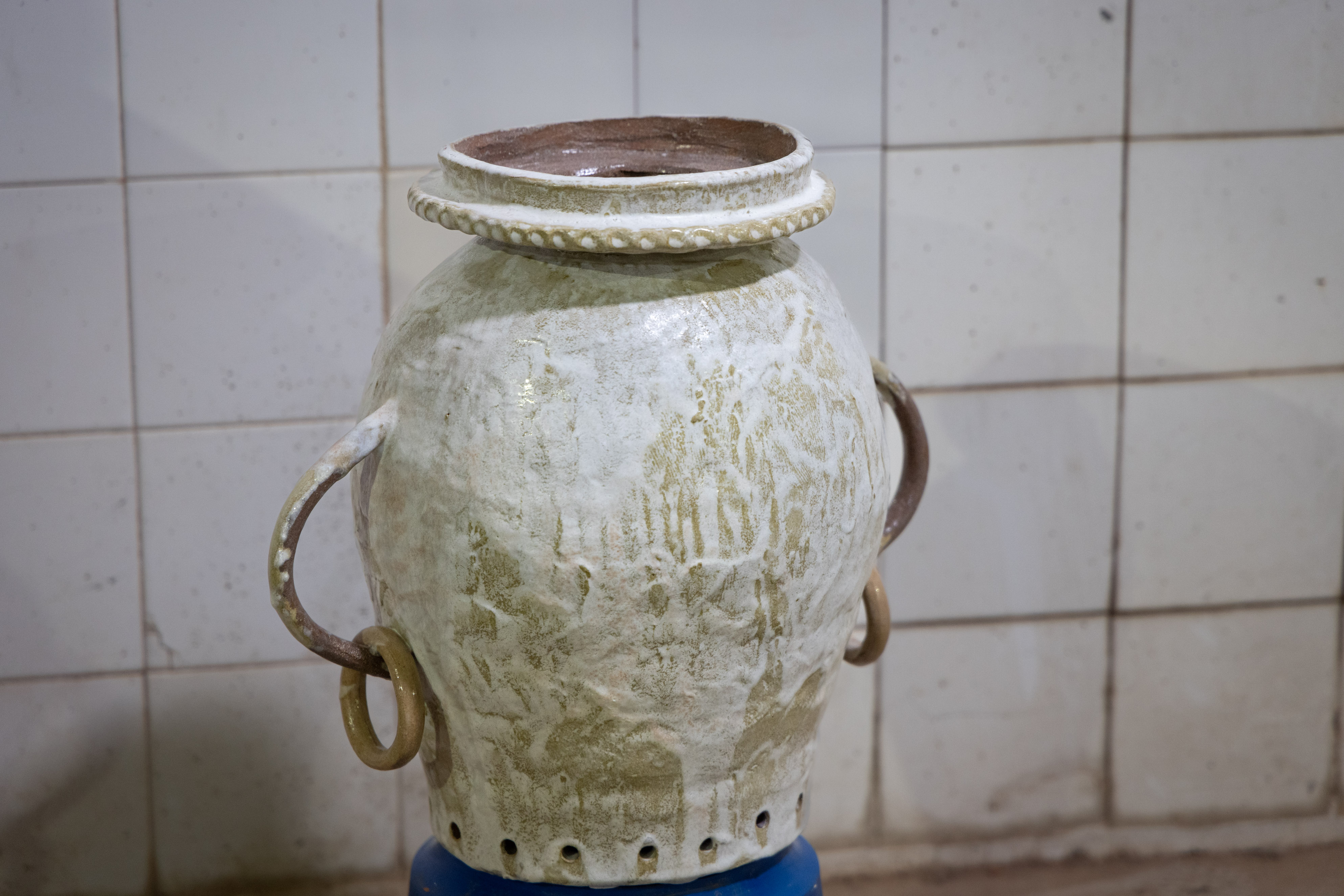
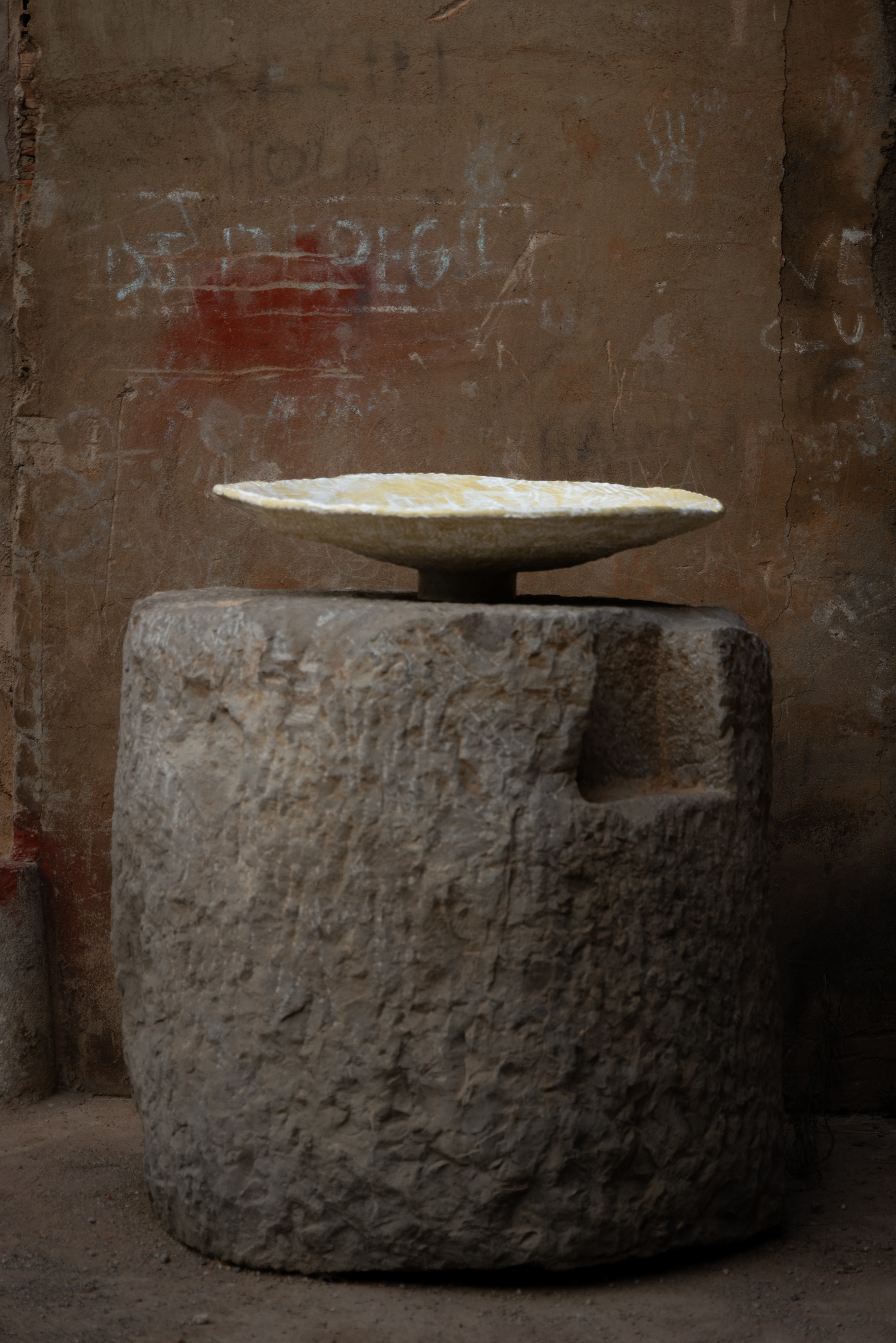
Así, estas obras reflexionan sobre el papel de lo húmedo en el cuerpo, que ha sido el foco de mis investigaciones hasta ahora y que ha sido normalmente trabajado desde el material cerámico. Los jarrones y vasijas tienen algo antropomorfo en cuanto pensamos en sus partes, boca, cuello o barriga, y las fuentes, de algún modo, cargan con esta idea que expone Amelie Nothomb de un cuerpo como un tubo que filtra lo de fuera. En este caso, tanto el cuerpo como la cerámica tienen ese componente de filtración y también de permeabilidad.
Las pieles constituyen una vía de doble sentido, junto con los líquidos como el sudor o la orina que emanamos para limpiar el organismo, también la utilizamos como camino de entrada en el uso de cremas anticelulíticas o antiedad. Así, si la piel absorbe los componentes de estos ungüentos también podrían absorber, por ejemplo, la mano del amigo que te toca, las sustancias de la piscina en la que nadas o las teclas del ordenador en el que escribes. Después del giro afectivo, hay algo pegajoso en todo lo de “afuera”.
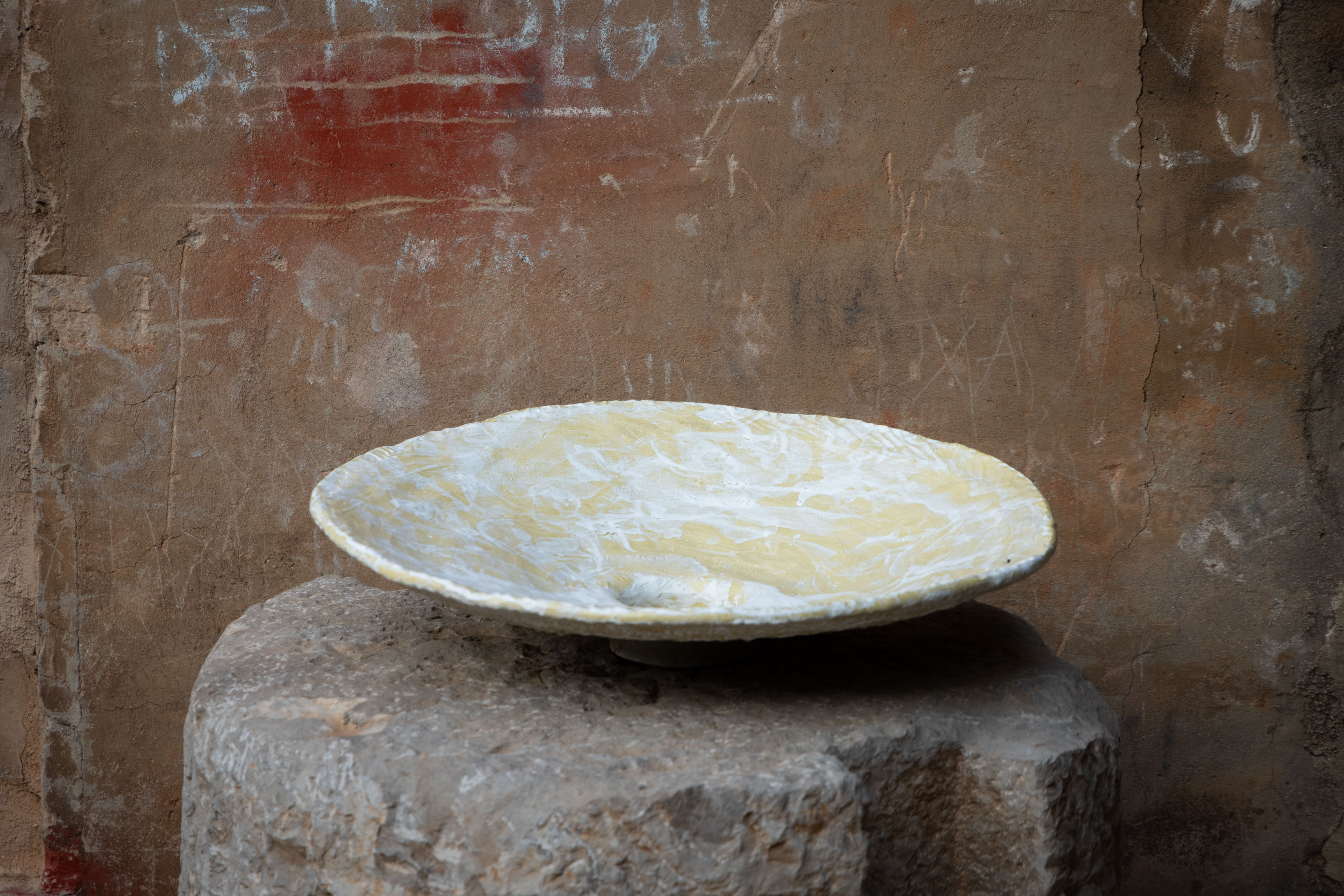
Las esculturas asimilan la idea de un cuerpo que es un circuito cerrado pero también afectable de sustancias líquidas. Los volúmenes cerámicos son esmaltados buscando un error. Una laguna o borrón que deje partes de la pasta cerámica al descubierto. Obras cíclicas circulares que se autorrecogen también e intentan de algún modo, no salpicar.
Por último, el título del proyecto se extrae de Jeremias 9, una parte de la Biblia en la que se aspira a un lloro infinito y a ser manantial y fuente de agua eterna.
ENG
A few years ago, a woman cursed me, wishing that my river would dry up. What does that mean? I wondered, thinking it probably had something to do with the possibility, or in this case, the impossibility, of having children. It is truly a bad thing for a river to dry up: what is fertile and moist becomes dry and arid, violent for the human body when it is ready to inhabit.
In Galicia, this year, it seems to me that it has rained more than in any other year I can remember. The cloudy days and the few rays of light have left the forests green and have made me take vitamin D pills every month.
Meanwhile, the Valencian Community, which is actually relatively close and has been the place of my family summers, is experiencing one of the driest hydrological years in its history.
Words like secaño come to mind, secaño, or acequia, since my family had a mill in Alberic. Valencia seems salty to me.
It’s so hot!
I bathe in the sea. This body of water, so heavily used and overcrowded in the Mediterranean during the summer months. The fluid is not as cool as I would like; I am sweating from being under the sun in these temperatures, and I am salty too. So I exchange my salt with that of the ocean while I dehydrate and get wet at the same time. Could I drink through my skin?
I think my body does not absorb things as much as it should. I don’t know how permeable I am, but I know I am a liquid circuit, I am, after all, 60% ever-changing water.
Diane Ackerman writes in A Natural History of the Senses a text that reflects on the ideas we want to address and also explains, in a rather comic way, men’s attraction to women because of their scent:
“Our sense of smell, like so many of our organic functions, is an atavism from that time at the beginning of evolution when we lived in the seas. Before we can notice it, an odor must first dissolve in an aqueous solution that our mucous membranes can absorb. While practicing water sports in the Bahamas some years ago, I realized for the first time two things: that we carry the ocean inside us, and that our veins are a reflection of the tides. As a human woman, with ovaries whose production resembles fish roe, when I entered the soft, undulating belly of the sea from which our first ancestors emerged millennia ago, I felt so moved that my eyes filled with water beneath the surface and I mixed my salt with that of the sea. Distracted by these thoughts, I looked around for the boat from which I had dived. I couldn’t find it. But it didn’t matter: the whole sea was my home.
That moment of mysticism left my nose irritated, and I felt pain when I surfaced, until I removed my mask, blew my nose, and calmed down. But I have never forgotten that sense of belonging. Our blood is largely salt water; we still need saline solution to wash our eyes or insert contact lenses; and in every era it has been said that a woman’s vagina smells of fish. In fact, Sandor Ferenczi, a disciple of Freud, went so far as to claim (…) that men love women only because their bellies smell of brined herring, and men are trying to return to the primordial ocean.”
In The Metaphysics of Tubes, Amélie Nothomb writes about her aquatic symbiosis during her first years of life. In this book she also writes about the body as a tube, and about tubes as a singular mixture of “fullness and emptiness, hollow matter, a membrane of existence that protects a bundle of nonexistence.” Her body, like the tube of a hose, possessed flexibility but was also rigid. “I knew the absolute serenity of the cylinder. I filtered the universe and retained nothing”:
“The ideal thing, when it rains without ceasing, is also to go swimming. The remedy against water is even more water. From then on, I spent my life in the Little Green Lake. Nishio-san accompanied me every day, clinging to her umbrella: she had not given up taking the side of dryness. I, from the outset, had chosen the opposite side: I left the house wearing my swimsuit so as to be wet before swimming. Never having time to dry myself—that was my motto. I dived headfirst into the lake and did not come out. The most beautiful moment was the downpour: then I would rise to the surface to float on my back and receive the sublime perpendicular shower. The world fell upon my entire body. I opened my mouth to swallow the cascade; I rejected not a single drop of what the rain offered me. The universe was generosity, and I had enough thirst to drink it to the last sip.
The water beneath me, the water above me, the water within me: I was water.”
Thus, these works reflect on the role of the moist within the body, which has been the focus of my research so far and has generally been explored through ceramic material. Vases and vessels have something anthropomorphic about them when we think of their parts, mouth, neck, or belly, and fountains, in some way, carry this idea expressed by Amélie Nothomb of a body as a tube that filters what is outside. In this case, both the body and ceramics share that component of filtration and also of permeability.
Skin constitutes a two-way pathway. Along with liquids such as sweat or urine that we emit to cleanse the organism, we also use it as an entry route when applying anti-cellulite or anti-aging creams. Thus, if the skin absorbs the components of these ointments, it could also absorb, for example, the hand of a friend who touches you, the substances in the swimming pool where you swim, or the keys of the computer on which you write. After the affective turn, there is something sticky about everything “outside.”
The sculptures assimilate the idea of a body that is a closed circuit yet also susceptible to liquid substances. The ceramic volumes are glazed in search of an error, a pool or blur that leaves parts of the ceramic body exposed. Cyclical, circular works that fold back into themselves and attempt, in some way, not to splash.
Finally, the title of the project is drawn from Jeremiah 9, a part of the Bible in which there is a longing for infinite weeping and to become a spring and a source of eternal water.